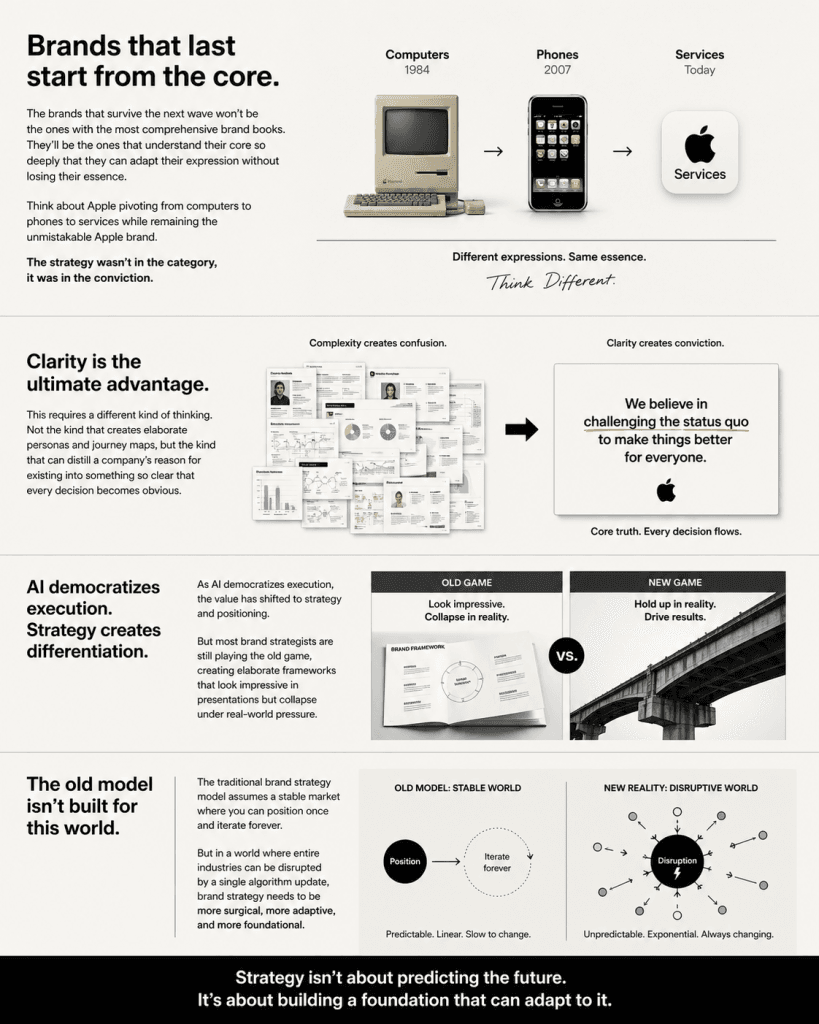
The brands that survive the next wave won’t be the ones with the most comprehensive brand books. They’ll be the ones that understand their core so deeply that they can adapt their expression without losing their essence. Think about Apple pivoting from computers to phones to services while remaining the unmistakable Apple brand. The strategy wasn’t in the category, it was in the conviction.
This requires a different kind of thinking. Not the kind that creates elaborate personas and journey maps, but the kind that can distill a company’s reason for existing into something so clear that every decision becomes obvious.
As AI democratizes execution, the value has shifted to strategy and positioning. But most brand strategists are still playing the old game, creating elaborate frameworks that look impressive in presentations but collapse under real-world pressure.
The traditional brand strategy model assumes a stable market where you can position once and iterate forever. But in a world where entire industries can be disrupted by a single algorithm update, brand strategy needs to be more surgical, more adaptive, and more foundational.